
PRS - POSITION REFERENCE SYSTEMS
We already know that DP operations demand a high degree of safety. But who is responsible for this system? In previous posts we covered one of them, the Operator, and today we continue with another key part of DP: the PRS.
Have you heard of PRS? Do you know how important they are to DP? Today we are starting a series of posts on the types most used in the offshore industry. Take a look:
We already know that DP operations demand a high degree of safety. But who is responsible for this system? In previous posts we covered one of them, the Operator, and today we continue with another key part of DP: the PRS.
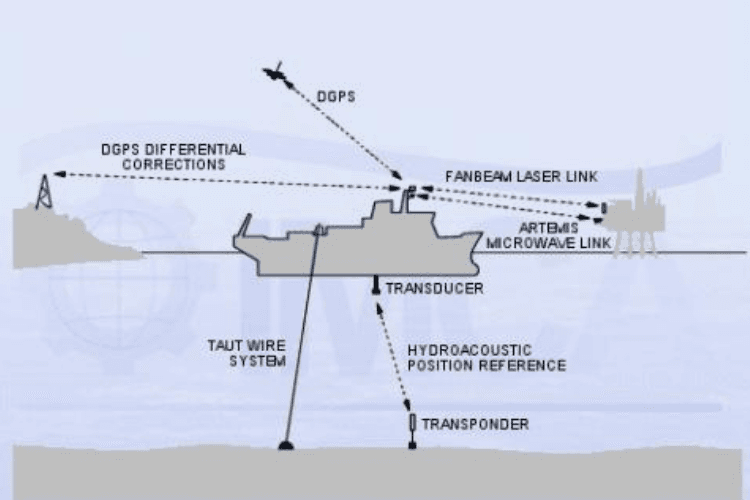
Position Reference Systems, or simply PRS — also known as PME (Position Measuring Equipment) — are responsible for delivering information about the position of the vessel to the DP Control System. That position can be Global or Local (relative):
Global PRS:
Provides the location on the surface of the Earth in geographic coordinates or UTM coordinates. Example: DGNSS.
Relative PRS:
The position of the vessel is given from a relative, local reference. Example: hydroacoustic, Artemis, Fanbeam.
As for how many PME your vessel has, that depends on the DP Class it falls under:
The DP System relies on more than one PRS in order to have more accurate information about the position of the vessel. For DP Class 2 or 3, at least 3 PRS are required: if one PRS indicates a position different from another, there is still a third one to be used for comparison, to establish which location is correct and which PRS has failed. The operator must select PRS based on different operating principles, to avoid errors common to them, where a single error would lead to loss of position.
The control system receives the inputs from every enabled PRS and combines them either equally or according to the individual performance of each one. It is also possible to set the weights — the relevance — of each PRS manually: the greater the weight assigned to a PRS, the greater the influence it will have on the position calculation.
The first DP control systems were not able to use previously received data to improve their performance on future inputs. Today they are already able to raise reliability and performance in this way by using the Kalman Filter.
Examples of PME include: DGNSS, Artemis, DARPS, HPR, Fanbeam, Cyscan, Radius, among others. Each has its own operating principle, range, operating conditions, advantages and disadvantages. In the image below you can see a comparison of the range of some of them:
And how many PRS does your vessel have? Which ones are they? Tell us in the comments — over the coming weeks we will cover each of the main PRS on board!
Sources: https://en.wikipedia.org/wiki/Dynamic_positioning#Position_reference_systems https://studfile.net/preview/5155246/page:5/ https://offshoreengineering.com/platforms/bottom-founded/169-education/dynamic-positioning/267-position-reference-for-dp
Enjoyed this article?
Share it with your colleagues and keep learning with Vision Marine Training
View more articles