Rising Solar Activity and Its Effects on GNSS Positioning (Global Navigation Satellite System)
Global Navigation Satellite Systems (GNSS) have transformed the way we navigate and determine our position on Earth. These signals, however, are subject to interference, and one of the main sources of interference is increased ionospheric activity.
Rising Solar Activity and Its Impact on GNSS Positioning
Global Navigation Satellite Systems (GNSS) have transformed the way we navigate and determine our position on Earth. These signals, however, are subject to interference, and one of the main sources of interference is increased ionospheric activity.
Increased ionospheric activity is related to factors such as sunspot activity, solar and magnetic storms, geographic location, seasonal variations and diurnal variations. These conditions can affect the accuracy of GNSS positioning.
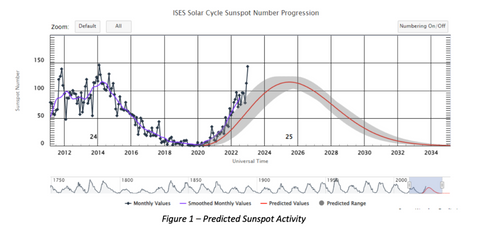
We are currently in solar cycle 25, which began in December 2019 and is expected to peak in July 2025. Solar activity levels are exceeding forecasts, however, which has a direct impact on GNSS systems.
Although the effects of interference cannot be eliminated entirely, there are measures that help mitigate its impact. The recommendations are to use multi-constellation and multi-frequency GNSS solutions, to use L-band with multiple beams, and to select receivers and services from different providers.
In extreme situations, total loss of GNSS positioning may occur. In such cases it is essential to consider alternatives, such as non-GNSS position reference systems, including inertial navigation systems, and to increase the vigilance of dynamic positioning (DP) operators.
It is worth stressing that offshore risk management must take into account the impact of ionospheric activity and the possibility of losing communications and GNSS positioning. Adopting suitable set-ups in line with the ASOG and CAM guidelines is recommended.
Given this scenario, it is essential to be prepared for the possibility of GNSS failures and to seek alternative solutions to ensure the safety and accuracy of positioning in offshore operations.
Enjoyed this article?
Share it with your colleagues and keep learning with Vision Marine Training
View more articles